
SIU Director’s Report - Case # 24-OVI-359
Warning:
This page contains graphic content that can shock, offend and upset.
Contents:
Mandate of the SIU
The Special Investigations Unit is a civilian law enforcement agency that investigates incidents involving an official where there has been death, serious injury, the discharge of a firearm at a person or an allegation of sexual assault. Under the Special Investigations Unit Act, 2019 (SIU Act), officials are defined as police officers, special constables of the Niagara Parks Commission and peace officers under the Legislative Assembly Act. The SIU’s jurisdiction covers more than 50 municipal, regional and provincial police services across Ontario.
Under the SIU Act, the Director of the SIU must determine based on the evidence gathered in an investigation whether there are reasonable grounds to believe that a criminal offence was committed. If such grounds exist, the Director has the authority to lay a criminal charge against the official. Alternatively, in cases where no reasonable grounds exist, the Director cannot lay charges. Where no charges are laid, a report of the investigation is prepared and released publicly, except in the case of reports dealing with allegations of sexual assault, in which case the SIU Director may consult with the affected person and exercise a discretion to not publicly release the report having regard to the affected person’s privacy interests.
Information Restrictions
Special Investigations Unit Act, 2019
Pursuant to section 34, certain information may not be included in this report. This information may include, but is not limited to, the following:
- The name of, and any information identifying, a subject official, witness official, civilian witness or affected person.
- Information that may result in the identity of a person who reported that they were sexually assaulted being revealed in connection with the sexual assault.
- Information that, in the opinion of the SIU Director, could lead to a risk of serious harm to a person.
- Information that discloses investigative techniques or procedures.
- Information, the release of which is prohibited or restricted by law.
- Information in which a person’s privacy interest in not having the information published clearly outweighs the public interest in having the information published.
Freedom of Information and Protection of Personal Privacy Act
Pursuant to section 14 (i.e., law enforcement), certain information may not be included in this report. This information may include, but is not limited to, the following:
- Confidential investigative techniques and procedures used by law enforcement agencies; and
- Information that could reasonably be expected to interfere with a law enforcement matter or an investigation undertaken with a view to a law enforcement proceeding.
Pursuant to section 21 (i.e., personal privacy), protected personal information is not included in this report. This information may include, but is not limited to, the following:
- The names of persons, including civilian witnesses, and subject and witness officials;
- Location information;
- Witness statements and evidence gathered in the course of the investigation provided to the SIU in confidence; and
- Other identifiers which are likely to reveal personal information about individuals involved in the investigation.
Personal Health Information Protection Act, 2004
Pursuant to this legislation, any information related to the personal health of identifiable individuals is not included.
Other proceedings, processes, and investigations
Information may also have been excluded from this report because its release could undermine the integrity of other proceedings involving the same incident, such as criminal proceedings, coroner’s inquests, other public proceedings and/or other law enforcement investigations.
Mandate Engaged
Pursuant to section 15 of the SIU Act, the SIU may investigate the conduct of officials, be they police officers, special constables of the Niagara Parks Commission or peace officers under the Legislative Assembly Act, that may have resulted in death, serious injury, sexual assault or the discharge of a firearm at a person.
A person sustains a “serious injury” for purposes of the SIU’s jurisdiction if they: sustain an injury as a result of which they are admitted to hospital; suffer a fracture to the skull, or to a limb, rib or vertebra; suffer burns to a significant proportion of their body; lose any portion of their body; or, as a result of an injury, experience a loss of vision or hearing.
In addition, a “serious injury” means any other injury sustained by a person that is likely to interfere with the person’s health or comfort and is not transient or trifling in nature.
This report relates to the SIU’s investigation into the serious injury of an 80-year-old woman (the “Complainant”).
The Investigation
Notification of the SIU[1]
On August 26, 2024, at 9:30 p.m., the Sarnia Police Service (SPS) contacted the SIU with the following information.
On August 26, 2024, at 3:10 p.m., the Subject Official (SO) of the SPS, operating a fully marked Chevrolet Tahoe SUV northbound on Indian Road North with his full siren and emergency lights activated, was driving to a scene following a call for service involving weapons. As the SO approached a red light at Exmouth Street, the officer brought his cruiser to a stop before entering the intersection. At the same time, the Complainant was travelling eastbound on Exmouth Street and entered the intersection on a green traffic signal. The front driver’s side of her vehicle [Pontiac] struck the SO’s cruiser in the middle of the intersection. Both the Complainant and the SO were conscious and alert after the collision. The Complainant was transported to Bluewater Health (BH) in Sarnia via Emergency Medical Services (EMS) where she was diagnosed with a fracture in her neck. She was subsequently discharged and proceeded home wearing a neck brace.
The Team
Date and time team dispatched: 08/27/2024 at 6:30 a.m.
Date and time SIU arrived on scene: 08/27/2024 at 11:00 a.m.
Number of SIU Investigators assigned: 2
Number of SIU Forensic Investigators assigned: 1
Number of SIU Collision Reconstructionists assigned: 1
Affected Person (aka “Complainant”):
80-year-old female; interviewed; medical records obtained and reviewed
The Complainant was interviewed on August 27, 2024.
Civilian Witnesses (CW)
CW #1 Interviewed
CW #2 Interviewed
The civilian witnesses were interviewed between August 29 and 30, 2024.
Subject Official
SO Declined interview, as is the subject official’s legal right; notes received and reviewed
Evidence
The Scene
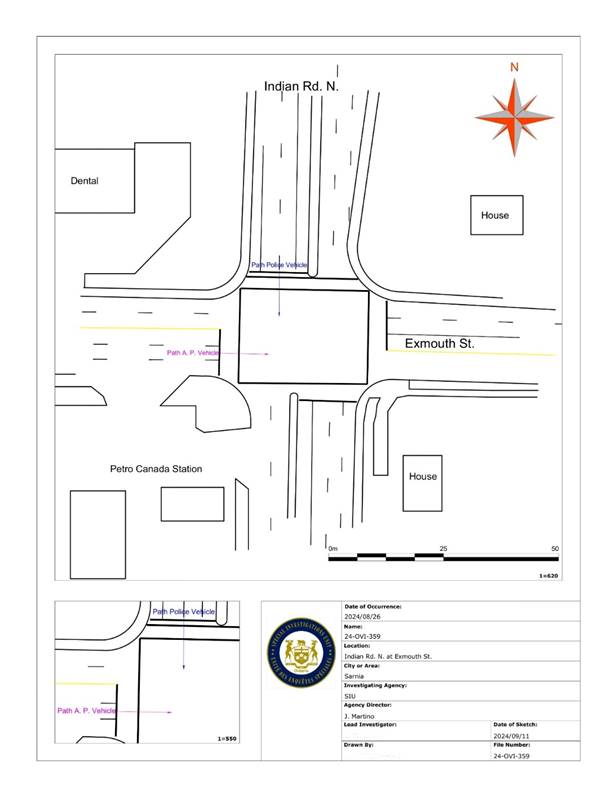
The events in question transpired in and around the intersection of Exmouth Street and Indian Road North, Sarnia.
Scene Diagram
Physical Evidence
The SIU forensic investigator attended the scene on August 27, 2024.
The collision occurred at the intersection of Indian Road North and Exmouth Street. Indian Road North ran north-south and was a four-lane paved roadway with two lanes in each direction. At the intersection, the northbound roadway had four lanes with the outer two marked for turning left and right. Similarly, the southbound roadway was four lanes with the two outer lanes marked for left and right turns. The north and southbound lanes were separated by a raised concrete curb which extended one hundred metres south and four hundred metres north. At the entrance of the intersection northbound, in the left turn lane, there were the remains of absorbent laid down on some type of spill. Small fragments of glass were seen along the south side of the intersection near the northbound stop line. Tire marks were against the centre median at the east side of the curb, beside the left turn lane.
The intersection was controlled by traffic signals with pedestrian signals as well. The signals were seen to be visible and functioning properly.
Exmouth Street was a paved roadway which ran west-east and was two lanes in each direction with an additional left turn lane added before the intersection. There were no medians between west and eastbound traffic.
A treed yard and residential building were located at the southeast corner of the intersection, and a Petro-Canada fuel station located at the southwest. The fuel station had cameras mounted in the pump area.
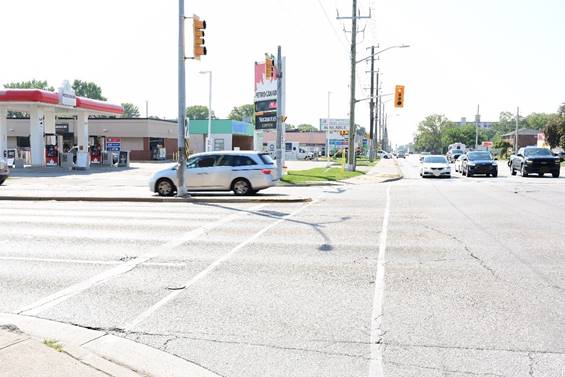
Figure 1 – West view from the southeast corner of the intersection
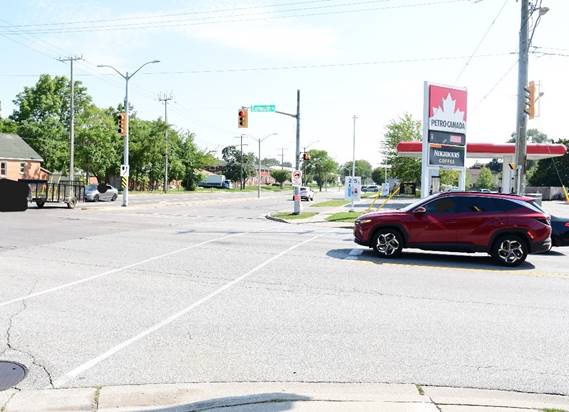
Figure 2 – South view from the northwest corner of the intersection
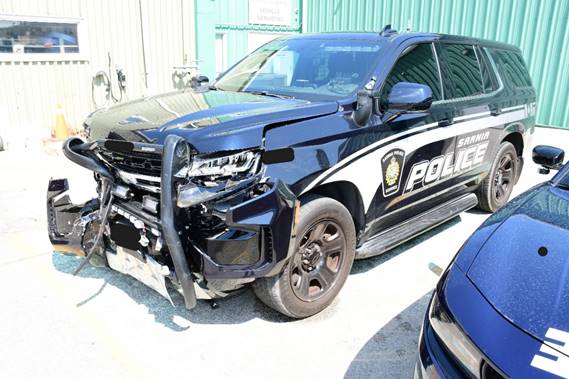
Figure 3 – Damage to the front end of the SO’s police vehicle
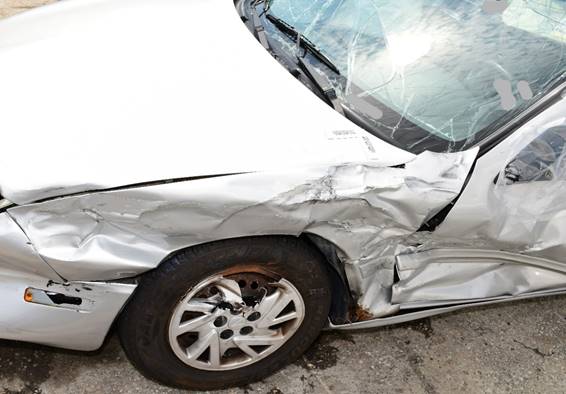
Figure 4 – Damage to the front driver’s side area of the Pontiac
Expert Evidence
SIU Reconstruction Report
The final rest positions of the involved vehicles were determined based on the scene photographs taken after the collision event. The Pontiac came to rest with its right rear tire on the south raised median, facing in a southeast direction. The police vehicle came to rest adjacent to the Pontiac, with its right front tire in contact with the left rear tire of the Pontiac. The police vehicle was also facing in a southeast direction.
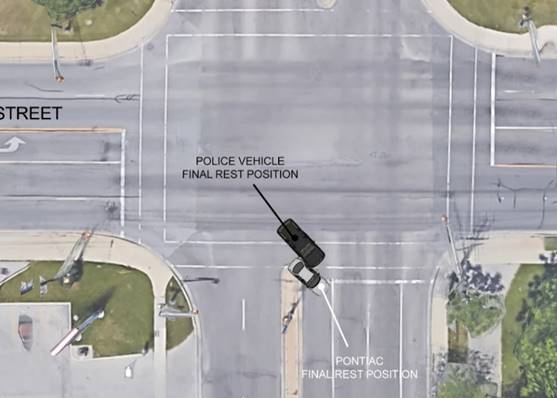
Figure 5 - Aerial image with the vehicles in their final rest positions
The front of the police vehicle aligned with the left side of the Pontiac at maximum engagement. There was blue paint transfer on the left front tire sidewall, which matched the blue paint on the front licence plate of the police vehicle. On the roadway, an east-west tire mark that transitioned to a diagonal mark leading towards the left front tire of the Pontiac was likely created by the Pontiac’s left front tire at impact. This placement was consistent with the Pontiac initially travelling in the curb lane of Exmouth Street and the police vehicle travelling southbound in the left turn lane as it entered the intersection.
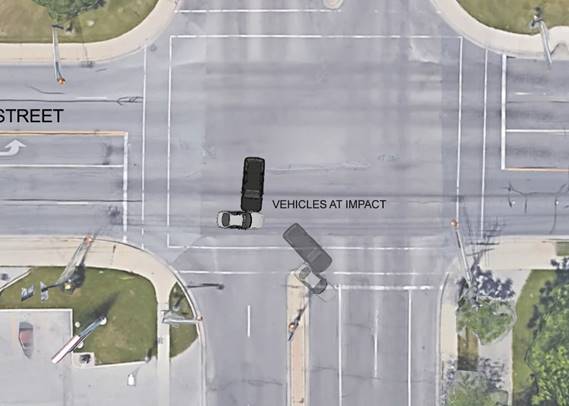
Figure 6 - Aerial image with the vehicles at impact (final rest positions are shown
as faded for reference)
The police vehicle recorded the following pre-impact data.
|
Time to Impact |
Vehicle Speed |
Brake Pedal |
|
8.0 s |
47 km/h |
ON |
|
7.5 s |
44 km/h |
ON |
|
7.0 s |
39 km/h |
ON |
|
6.5 s |
34 km/h |
ON |
|
6.0 s |
29 km/h |
ON |
|
5.5 s |
23 km/h |
ON |
|
5.0 s |
16 km/h |
ON |
|
4.5 s |
9 km/h |
ON |
|
4.0 s |
3 km/h |
ON |
|
3.5 s |
2 km/h |
OFF |
|
3.0 s |
5 km/h |
OFF |
|
2.5 s |
12 km/h |
OFF |
|
2.0 s |
20 km/h |
OFF |
|
1.5 s |
27 km/h |
OFF |
|
1.0 s |
32 km/h |
OFF |
|
0.5 s |
37 km/h |
ON |
|
Time of Impact |
31 km/h |
ON |
The Pontiac recorded the following pre-impact data.
|
Time to Impact |
Vehicle Speed |
Brake Pedal |
|
8 s |
- |
OFF |
|
7 s |
- |
ON |
|
6 s |
- |
ON |
|
5 s |
48 km/h |
OFF |
|
4 s |
47 km/h |
OFF |
|
3 s |
48 km/h |
OFF |
|
2 s |
51 km/h |
OFF |
|
1 s |
10 km/h |
ON |
At six seconds before impact, the police vehicle was in the left turn lane (based on the SO’s written statement) travelling about 29 km/h about 30 metres from impact. The Pontiac (assuming a constant speed of 50 km/h) was located in the curb lane of Exmouth Street about 75 metres from the point of impact.
At five seconds before impact, the police vehicle was in the left turn lane and slowing. The SO was traveling about 16 km/h at this time and was located 24 metres from impact. The Pontiac was travelling 48 km/h at this time and was located about 63 metres from impact.
At four seconds before impact, the police vehicle had slowed to nearly a stop (about 3 km/h) in the left turn lane with the vehicle’s front end at the stop line of the intersection. The Pontiac was located about 50 metres from impact and traveling 47 km/h.
At three seconds before impact, the police vehicle was starting to accelerate, but still only traveling about 5 km/h. Its front end was just crossing the stop line of the intersection, about 20 metres from impact. The Pontiac was in the curb lane, about 25 metres from the intersection traveling 48 km/h.
At two seconds before impact, the police vehicle was accelerating and steering to the right (presumably, to re-enter the southbound lanes). The police vehicle’s speed at this time was about 20 km/h. The Pontiac was nearing the intersection at this time traveling about 51 km/h.
At one second before impact, the police vehicle was still accelerating and about ten metres from impact. Its speed was about 32 km/h. At 0.5 seconds before impact, the SO started to brake. The Pontiac was entering the crosswalk at this time. It was difficult to know the precise speed of the Pontiac at this time since it was dependent on when braking started and how aggressively the Complainant braked; however, the Pontiac’s speed would likely be around 40 km/h at this time.
It was clear the police vehicle slowed to a near stop and entered the intersection before the Pontiac entered the intersection. After coming to a near stop, the SO started to accelerate when the Pontiac was still 25 metres from entering the intersection. At this distance, and at a speed of about 50 km/h, a vehicle could come to a stop under moderately heavy braking. In other words, when the SO decided to accelerate and enter the intersection, the Pontiac was in a position where a driver could safely stop before entering the intersection. Once it was clear the Pontiac was not going to stop, which was sometime between one to two seconds before impact, there would not have been enough time for the SO to complete an avoidance maneuver and avoid a crash. This was based on there not being enough time for a driver to perceive and react to an unexpected hazard (roughly 1 to 1.5 seconds) and complete an avoidance maneuver successfully (at least one second).
Video/Audio/Photographic Evidence[2]
Communications Recordings – 911 Calls
On August 26, 2024, at 3:00 p.m., the EMS received a call asking for an ambulance for a person that had cut an artery on their wrist by hitting a window. The EMS called the SPS asking that they accompany them.
At 3:03:00 p.m., the SO was dispatched to the scene with the EMS for a possible self-inflicted wound to the wrist.
At 3:06:29 p.m., the SO reported he had been involved in a collision at Exmouth Street and Indian Road. He acknowledged an ambulance was required. A call was made to the EMS. A caller reported that a SPS SUV blew through the lights at Indian Road and Exmouth Street with the emergency lights on. A vehicle did not stop and hit the SPS SUV. The caller was not identified.[3]
At 3:07:00 p.m., a man called to report a collision at Exmouth Street and Indian Road. The police officer was out of his police vehicle.
Materials Obtained from Police Service
Upon request, the SIU obtained the following records from the SPS between August 30, 2024, and September 11, 2024:
- Record of driving, vehicle data
- Basic Constable Training – the SO;
- Communications recordings;
- Computer-assisted Dispatch Report;
- Event Details Reports;
- General Occurrence Reports;
- Coach Officer comments – the SO;
- Involved Officers List;
- Scene Photos;
- Motor Vehicle Collision Report;
- Rules of the road regarding red lights
- Witness contact information – CW #2;
- Crash Data Retrieval data; and
- Statement - the SO.
Materials Obtained from Other Sources
The SIU obtained the following records between August 29, 2024, and September 9, 2024:
- Ambulance Call Report from Lambton EMS;
- The Complainant’s medical records from BH; and
- Video footage - Elite Property Group.
Incident Narrative
The evidence collected by the SIU, including interviews with the Complainant and civilian eyewitnesses, gives rise to the following scenario. As was his legal right, the SO chose not to interview with the SIU. He did authorize the release of his notes.
In the afternoon of August 26, 2024, the Complainant was driving a Pontiac eastbound on Exmouth Street in the curb lane. She entered the intersection at Indian Road North on a green light and was struck by a southbound vehicle. The impact pushed her vehicle in a southeast direction towards the centre median dividing north and southbound traffic on Indian Road North.
The vehicle that struck the Pontiac was a Ford Explorer police cruiser operated by the SO. The officer was responding to a call for service involving an injured person. Slowing and coming to a virtual stop in the southbound left turn lane at the stop line, the SO then accelerated into the intersection. He had cleared the westbound traffic, which had come to a stop for him, and the eastbound passing lane when he broadsided the Complainant’s vehicle.
The Complainant was taken to hospital and diagnosed with a fractured neck.
Relevant Legislation
Section 320.13(2), Criminal Code – Dangerous Operation Causing Bodily Harm
320.13(2) Everyone commits an offence who operates a conveyance in a manner that, having regard to all of the circumstances, is dangerous to the public and, as a result, causes bodily harm to another person.
Sections 144(18) and 144(20), Highway Traffic Act – Red Light Exemption
144(18) Every driver approaching a traffic control signal showing a circular red indication and facing the indication shall stop his or her vehicle and shall not proceed until a green indication is shown.
144(20) Despite subsection (18), a driver of an emergency vehicle, after stopping the vehicle, may proceed without a green indication being shown if it is safe to do so.
Analysis and Director’s Decision
The Complainant was seriously injured in a motor vehicle collision on August 26, 2024. As the vehicle she was driving was struck by a police cruiser, the SIU was notified of the incident and initiated an investigation. The driver of the cruiser – the SO – was identified as the subject official. The investigation is now concluded. On my assessment of the evidence, there are no reasonable grounds to believe that the SO committed a criminal offence in connection with the collision.
The offence that arises for consideration is dangerous driving causing bodily harm contrary to section 320.13(2) of the Criminal Code. As an offence of penal negligence, a simple want of care will not suffice to give rise to liability. Rather, the offence is predicated, in part, on conduct that amounts to a marked departure from the level of care that a reasonable person would have observed in the circumstances. In the instant case, the issue is whether there was a want of care in the manner in which the SO operated his vehicle, sufficiently egregious to attract criminal sanction, that caused or contributed to the collision. In my view, there was not.
The SO was in the execution of his lawful duties – responding to a call for service involving an injured person – in the moments leading to the collision.
With respect to the manner of the officer’s driving, I am unable to reasonably conclude on the evidence that the SO transgressed the limits of care prescribed by the criminal law. The Complainant did nothing wrong when she entered the intersection on a green light at reasonable speeds, other than perhaps the fact that she failed to take heed of the SO’s emergency lights and siren, and bring her vehicle to a stop. It is unclear why the Complainant did not see the officer when other motorists at the intersection had noticed the officer’s emergency equipment and yielded the right of way to the cruiser. On the other hand, it is apparent that the SO did not quite live up to the standard of section 144(20) of the Highway Traffic Act, which requires that officers only proceed through a red light when it is safe to do so. Rather than slowly make his way across the intersection to ensure that traffic in the eastbound curb lane had come to a stop or was otherwise clear, the officer seems to have accelerated into the intersection. That decision effectively rendered the collision a foregone conclusion when the Complainant entered the intersection. Be that as it may, the SO did approach the intersection with his emergency lights and siren on, came to a virtual stop at the intersection before entering, and had confirmed that most (if not all) of the traffic in the vicinity had yielded before he accelerated forward. On this record, the SO’s indiscretion falls short of amounting to a marked departure from a reasonable standard of care in the circumstances.
For the foregoing reasons, there is no basis for proceeding with criminal charges in this case. The file is closed.
Date: December 23, 2024
Electronically approved by
Joseph Martino
Director
Special Investigations Unit
Endnotes
- 1) Unless otherwise specified, the information in this section reflects the information received by the SIU at the time of notification and does not necessarily reflect the SIU’s findings of facts following its investigation. [Back to text]
- 2) The following records contain sensitive personal information and are not being released pursuant to section 34(2) of the Special Investigations Unit Act, 2019. The material portions of the records are summarized below. [Back to text]
- 3) The SIU was unable to identify the caller. [Back to text]
Note:
The signed English original report is authoritative, and any discrepancy between that report and the French and English online versions should be resolved in favour of the original English report.