
2026/27 – 2028/29 Special Investigations Unit Business Plan
Contents:
- Executive Summary
- Mandate
- Overview of Programs and Activities
- Risks and Risk Factor
- Strategic Directions and Implementation Plan
- Staffing, Human Resources, and Compensation Strategy
- Information Technology (IT) / Electronic Service Delivery (ESD) Plan
- Initiatives Involving Third Parties
- Communications and Outreach
- Diversity and Inclusion Plan
- Multi-Year Accessibility Plan
- Three-year Financial Plan
- Performance Measures and Targets
Executive Summary
The following achievements in 2025-26 supported the Special Investigations Unit’s (SIU’s) strategic goals and priorities:
- Onboarded of Nishnawbe Aski Nation (NAN) Communities after Nishnawbe Aski Police Service Board (NAPSB) opted-in to the Community Safety and Policing Act, 2019 (CSPA)
- Held meetings with NAPS executives and command staff to clarify respective roles and responsibilities for SIU mandated incidents;
- Coordinated outreach events, trainings and cultural exchanges between SIU investigators and leaders of NAN communities;
- Launched a Microsoft SharePoint site (“NANTI”) to provide information of the band structures, key contact information and logistical planning for remote community access;
- Secured 24/7 communication through the Ministry of Environment, Conservation and Parks (MECP) call center for SIU employee check ins, and tiered responses in the event of missed check ins and to mitigate any safety concerns of investigators while on NAN territories; and
- Drafted and sent an introduction letter to all 49 NAN Chiefs.
- Organized specialized trainings to ensure high quality investigations and foster a modern and skilled workplace, including, but not limited to:
- Niche UA 6.04 systems training for Investigative Managers, Regional and Lead Investigators as the SIU transitions to the newest version;
- STEP training for Lead and Regional Investigators, focused on de-escalation and situational awareness; and,
- Indigenous cultural and sensitivity training tailored to investigations in Nishnawbe-Aski Nation (NAN) communities for Lead investigators.
- Implemented new strategies to optimize the SIU’s ability to be strategic and responsive, including, but not limited to:
- Updated Operations Policy 002 (The Investigative Process) with clearer criterion in the work assignment process to ensure fair distribution of work;
- Delegated closure memos from the SIU Director to the SIU Deputy Director, to improve decision making timelines; and
- Formalized a new Memorandum of Understanding (MOU) between MAG and the SIU to clarify roles and responsibilities.
Mandate
The SIU is an independent government agency that has jurisdiction over municipal, regional and provincial police officers, as well as special constables employed by the Niagara Parks Commission and peace officers with the Legislative Protective Service. Anyone the SIU is mandated to investigate is referred to as an ‘official’. The SIU Director may cause a criminal investigation to be conducted into any incident in which any of the following occurs, if the incident may have resulted from criminal conduct by an official:
- The death of a person.
- The serious injury of a person.
- The discharge of a firearm at a person.
- The sexual assault of a person, as reported by the person.
During its investigations, the agency gathers and assesses evidence, and the Director ultimately decides whether the evidence leads to the reasonable belief that a criminal offence has been committed. If the Director forms such a belief, they shall lay a criminal charge against the official(s), and that charge will then be prosecuted by the Crown Attorney. If the Director does not form such a belief, they cannot lay a criminal charge against the official(s). Instead, a report—the ‘Director’s Report’—is posted publicly and provided to the affected parties.
The SIU was created in 1990 with a mission to nurture public confidence in policing by ensuring that the conduct of police officers, in cases falling under SIU jurisdiction, are subject to rigorous and independent investigations. Decades later, and with an expanded mandate, the SIU remains steadfast in pursuing that same mission.
Vision, Mission, and Priorities
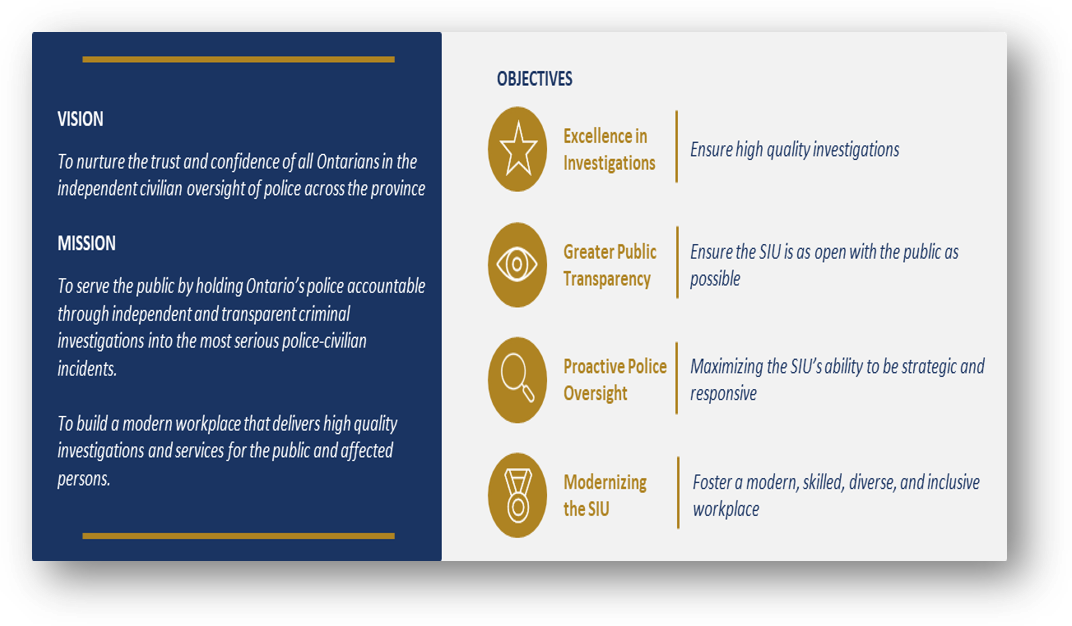
In 2023, the SIU initiated an organizational review in response to the recent changes in its status as an independent civilian agency, its expanded mandate for more effective and transparent investigations, and new reporting obligations, as well as to review its current organizational structure to identify gaps in its current state.Following a number of initial consultations, including internal staff and managers, key stakeholders, police associations, and the community, SIU leadership engaged in a series of working sessions to refresh the organizational vision. The refreshed vision, mission, and priorities are listed below.
Vision
To nurture the trust and confidence of all Ontarians in the independent civilian oversight of police across the province.
Mission
To serve the public by holding Ontario’s police accountable through independent and transparent criminal investigations into the most serious police-civilian incidents.
To build a modern workplace that delivers high quality investigations and services for the public and affected persons.
Priorities
- Excellence in Investigations
- Proactive Police Oversight
- Greater Public Transparency
- Modernizing the SIU
Overview of Programs and Activities
i) Investigations
The legislative framework for the SIU is set out in the Special Investigations Unit Act, 2019, (SIU Act). The mandate of the SIU is to nurture confidence in Ontario’s police services and select special constables and peace officers by assuring the public that the actions of these officials resulting in serious injury, death, the discharge of a firearm or an allegation of sexual assault are subjected to rigorous, independent investigations. Incidents which fall within this mandate must be reported to the SIU by the organization which employs the involved official and/or may be reported by any other person or organization.The objective of every SIU investigation is to determine whether there is evidence of criminal wrongdoing on the part of the official. It is not to determine whether the involved official(s) may have committed some lesser offence, such as a breach of a provincial law or professional misconduct.
Disclaimer: As of January 1, 2025, the SIU has caused investigations into serious incidents reported by the Nishnawbe-Aski Police Service (NAPS) after they opted-in to the Community Safety and Policing Act, 2019 (CSPA) on December 10, 2024.
Serious Injury
The SIU’s investigative jurisdiction is limited to those incidents involving officials where there is a serious injury, death, allegation of sexual assault or discharge of a firearm by an official at a person.
A person sustains a serious injury if the injury in question is likely to interfere with the person’s health or comfort and is not transient or trifling in nature. A serious injury includes:
- An injury that results in admission to a hospital;
- A fracture to the skull, or to a limb, rib, or vertebra;
- Burns to a significant proportion of a person’s body;
- The loss of any portion of a person’s body; or
- A loss of vision or hearing.
The SIU normally investigates incidents when the official was on-duty, but will investigate off-duty incidents if:
- The official was engaged in the investigation, pursuit, detention or arrest of a person or otherwise exercised the powers of a police officer, special constable or peace officer, as the case may be, whether or not the official intended to exercise such powers or identified him or herself as a person who may exercise such powers; or
- The incident involved equipment or other property issued to the official in relation to his or her duties.
What We Cannot Investigate
Complaints regarding improper conduct by an official (e.g. allegations of racial profiling, harassment, corruption, or use of force without serious injury) should be referred to the appropriate police service or to the Law Enforcement Complaints Agency (LECA). The Inspectorate of Policing will review matters involving the adequacy and effectiveness of police services. While such complaints may require further investigation, complaints such as these do not fall within the mandate of the SIU.
ii) Affected Persons Program
The Affected Persons Program (APP) is a crucial component of the SIU, providing support services to those negatively impacted by incidents investigated by the SIU.The program is staffed with one (1) manager and three (3) APP coordinators to provide support services from the outset of investigations, throughout the investigative process, and at their conclusions, as well as during criminal justice and inquest proceedings.
When applicable, the Affected Persons Coordinator (APC) will liaise with investigators regarding the needs of affected persons in any given case.
APP experienced significant increase in case involvement (232%) due to involvement in all death and sexual assault cases. APP supported including 1,104 affected persons throughout its investigations, including 181 SIU victims that were offered support through the court process, that resulted in a criminal charge against an official.
The APC will contact the affected person(s), either in person or by telephone. Depending on the circumstances of the investigation and needs of the affected person, the APC may provide:
- Crisis response and intervention;
- Psychological first aid, emotional support;
- Practical support including information and guidance pertaining to the mandate of the SIU and the investigative process, accessing emergency financial supports, safety planning, funeral funding and planning;
- Referrals and advocacy: assistance with navigating social and justice systems, accessing relevant community resources, legal and medical support, victim assistance programs; and
- Court support: enhance victim/witness understanding of, and participation in, the criminal court process by providing case specific information, court preparation and orientation, accompaniment, assistance with Victim Impact Statements.
APP staff also participate in public education and outreach activities to various service providers and stakeholders. Establishing and maintaining connections within the community is crucial to ensuring affected persons receive support services in a coordinated and timely manner.
The APCs typically travel throughout Ontario to meet with individuals at their homes or other places of convenience.
The APP services are available 24-hours a day and seven (7) days a week.
iii) Business Operations
- Provides strategic and operational financial, human resources, controllership and business planning activities;
- Responsible for knowledge management, records management and retention, asset management and administrative services;
- Provides information technology and management required to support investigations and the IT-based investigative support system, along with systems to manage incoming information from external sources and base infrastructure to support office productivity (including network services, voice/telecom and desk-side support);
- Manages facilities, Emergency Management and security-related matters;
- Leads initiatives targeted towards process efficiencies and continuous improvements to enhance service delivery;
- Develops strategic framework, policies and processes, reports on performance measures, risk management, and strategic initiatives;
- Leads the coordination of Training and Development, Employee Engagement, Diversity - Inclusion – Accessibility, and Anti-Racism initiatives and internal communications.
iv) Communications Program
Communication with the media is important to ensure that the SIU remains responsive, transparent and accountable to the public it serves. The SIU strives to provide timely and appropriate responses to all media inquiries and has developed a comprehensive communications program that aims to foster effective communications while also respecting the integrity of SIU investigations, witness confidentiality and the important privacy interests of those involved.To keep the public informed on the progress of SIU investigations, up-to-date information related to cases is shared on its website and through social media:
- Status of SIU Cases chart: the agency provides updates on each investigation.
- News releases: News releases are issued in the beginning stages of a case when a firearm has been discharged, someone dies, there has been a major collision, or a case has garnered a great deal of media interest. They are also issued at the conclusion of all SIU cases.
- Director’s Reports: At the conclusion of an SIU investigation, if the evidence does not satisfy the Director that there are reasonable grounds to lay criminal charges, a Director’s Report is produced and posted to the SIU’s website. The Director’s Report provides a summary of the investigation, evidence gathered and the findings of fact by the Director that led to the decision.
- Social Media: the SIU X account (formerly Twitter).
- Other: the SIU is featured in various outlets (including Blue Line Magazine and Global TV’s Crime Beat).
- Special Investigations Unit Act, 2019, S.O. 2019, c. 1, Sched. 5
- Freedom of Information and Protection of Privacy Act, R.S.O. 1990, c. F.31
- Youth Criminal Justice Act (S.C. 2002, c. 1)
- Sensitivity of evidentiary information
- Fair trial interests
- Confidentiality assurances given to civilian witnesses.
v) Outreach
SIU’s Outreach Program aims to engage with Ontario’s diverse communities to increase public awareness and understanding of the SIU, and to nurture relationships between SIU and the communities it serves.The Outreach Coordinator is responsible for creating meaningful dialogue with community stakeholders by proactively participating in community events and public education initiatives.
The goals and desired outcomes of the SIU’s outreach program are as follows:
- Increase awareness of the SIU, the Special Investigations Unit Act, 2019, SIU’s mandate, and the investigative process;
- Improve transparency and correct misperceptions;
- Enhance relationships with diverse community groups in Ontario; and
- Strengthen public engagement and expand opportunities for information sessions.
- More incidents that fall within SIU’s jurisdiction will be reported in a timely fashion;
- More witnesses will be willing to come forward and cooperate with investigations; and,
- Those impacted by SIU investigations and the broader public will have confidence in the work of the Unit.
vi) First Nations, Inuit and Métis Liaison Program (FNIMLP)
The First Nations, Inuit, and Métis Liaison Program (FNIMLP) was created in early 2006, following consultations with the Provincial Territorial Organizations (PTOs), the bodies representing First Nations in the province, to address the unique needs and concerns of Indigenous peoples and communities relating to police oversight. It does so principally by relationship-building between SIU and Indigenous communities with the aim of facilitating SIU investigations involving and/or impacting Indigenous persons or interests.Although the SIU’s statutory authority only extends to First Nations Police Services that have opted-in to police oversight[1], the SIU has in place a protocol for incidents that may involve Indigenous communities in one way or another. Whenever possible, a member of the program leads or participates in investigations involving or having an impact upon Indigenous peoples or communities to ensure that investigations are conducted with respect and sensitivity.
The FNIMLP is presently staffed by one (1) Investigative Manager, one (1) Advisor, six (6) Investigators, one (1) Forensic Investigator, and one (1) Outreach Coordinator. On a bi-annual basis, SIU reports to the PTOs with respect to the work of the FNIMLP.
vii) The Director’s Resource Committee (DRC)
In 2002, the SIU established the Director’s Resource Committee (DRC) to give voice to Ontario’s communities about the work of the SIU. Through the DRC, the SIU Director gains input and feedback on various matters of concern to the SIU and is apprised of trends and issues as experienced by community members including:- Black Legal Action Centre
- Canadian Mental Health Association Ontario
- Center for Inuit Children, Youth Families
- Chinese and Southeast Asian Legal Clinic
- Citizens with Disabilities
- Community Member
- Council of Agencies Serving South Asians
- Egale
- Faith of Life Network • Falconers LLP
- Ontario Coalition of Rape Crisis Centres
- Ontario Council of Agencies Serving Immigrants
- Ontario Federation of Indigenous Friendship Centres
- Ottawa Aboriginal Coalition
- Sakeenah
- Toronto Foundation for Youth Involvement in Politics
- Urban Alliance on Race Relations
Comprised of representatives of various community groups, the Committee meets with the SIU Director and staff formally during the year, and more frequently, between meetings via e-mail and telecommunications on issues as they arise.
The DRC is a key instrument for the SIU in seeking community consultation and support. It has regularly provided valuable advice on all manner of SIU operations. For example, the committee was consulted and provided feedback that informed the SIU’s current framework for the collection and analysis of race-based data.
In addition to the SIU Director being able to provide updates on the work of the agency throughout the year, the meetings have been an opportunity to raise issues identified by the members’ communities regarding the work of the SIU and/or the police.
viii) Diversity, Equity, Inclusion and Employee Experience (DEIEE) Committee
The Diversity, Equity, Inclusion and Employee Experience Committee stewards the agency’s work in the fields of diversity, equity, inclusion, and anti-racism.The deliverables are set within a three-tiered approach that seeks to:
- build SIU’s anti-racism competency and capacity;
- diversify SIU’s talent pipeline; and
- foster, and be accountable for, an anti-racist and inclusive workplace.
Race-Based Data (RBD) Collection Under the Anti-Racism Act, 2017
The SIU began collecting demographic information, including race-based data, on October 1, 2020. The collection was mandated by the Anti-Racism Act, 2017 (ARA), which aims to eliminate systemic racism and promote racial equality.
Pursuant to the ARA, and the Anti-Racism Data Standards, it prescribes applicable to the SIU, the SIU is required to solicit demographic information, including race-based data, from the subject officials in its investigations, as well as “affected persons”, that is, persons who have died, been seriously injured, alleged sexual assault by an official, or been the subject of a firearm discharge by an official. In the case of deceased individuals, their families are surveyed for the information.
The provision of this information from subject officials and affected persons is voluntary pursuant to the Act and its applicable data standards. The information is solicited from subject officials and affected persons via surveys.
The ARA and the Anti-Racism Data Standard also require that the information collected be published by the public agency and analyzed.
Risks and Risk Factor
SIU has identified both specific and enterprise-wide risks and risk factors that could potentially impact the agency’s ability to deliver on its legislative responsibilities. SIU will continue to monitor risk and implement controls to reduce risk.
External Risk Factors
Under the legislative framework of the SIU Act (2019), the agency must meet various requirements, creating a potential resource issue. For example:- Include in Director’s Reports relevant video, audio or photographic evidence, de-identified to the extent possible (as per the SIU Act (2019)) [2].
- Conclude investigations within 120-days (as per the SIU Act (2019)) while continuing to ensure thorough and quality investigations[3].
- Expanded SIU jurisdiction over special constable employed by the Niagara Parks Commission, a person who is a peace officer under section 103.0.2 of the Legislative Assembly Act, and NAPS police officers (more than 400 additional officials).
- Investigations into the discharge of a firearm at a person (a new category of cases).
- Expanded SIU scope to include police oversight into Nishnawbe-Aski Police Service (NAPS) and potentially other Indigenous police services who choose to opt-in to the Community Safety and Policing Act, 2019 (CSPA).
- Increasing caseload by approximately 13% (319) from 2019-20 to 2024-25 (361). The SIU is projecting 370 cases (excl. IMRs and NAPS) for 2025-26;
- Increasing volume of digital evidence by approximately 4,400% from 2021-22 (1,795 files) to 2024-25 (80,275 files);
- Increasing complexity and perplexities of investigations, especially NAPS investigations (19); and,
- Increasing public scrutiny of policing and police oversight increasing, especially now that the SIU causes investigations into serious incidents, as reported by NAPS.
Internal Risk Factors
- The organization’s structure and workforce model have not kept pace with legislative changes and new reporting requirements:
- Operational Inefficiencies: Misalignment between the workforce model and current operational and legislative (120-day) demands can result in inefficient processes and workflows.
- Employee Morale and Retention: Employees may feel frustrated and demotivated if they perceive the agency as being out of touch with current standards and practices.
- Reputation Damage: Non-compliance with legislative changes can harm the agency’s reputation, affecting stakeholder trust and customer loyalty.
- Training: Address gaps caused by legislative changes and new reporting requirements by equipping staff with updated knowledge and skills.
- Direct Costs (e.g., training platform subscription, instructor fees for workshops, and development of custom content).
- Indirect Costs (e.g., employee time spent in training (calculated as hourly wage × training hours), and temporary productivity dip during training rollout).
Strategic Directions and Implementation Plan
SIU is classified as a regulatory non-board governed provincial agency under the Agencies and Appointments Directive. The Agency is accountable to the government through MAG and subject to all statutory requirements and applicable directives set out by Treasury Board / Management Board of Cabinet. SIU will continue to comply with relevant legislation and regulations and protect the public interest by ensuring its priorities and goals are aligned with those of the government and ministry.
The SIU has four new priorities, starting in 2024/25, which it will be focusing on implementing over the next five years. These priorities also serve as the agency’s objectives and is linked to the Risk Register. The SIU will continue to work with the Ministry of the Attorney General on resourcing strategies to support its expanded mandate and increase in workload.
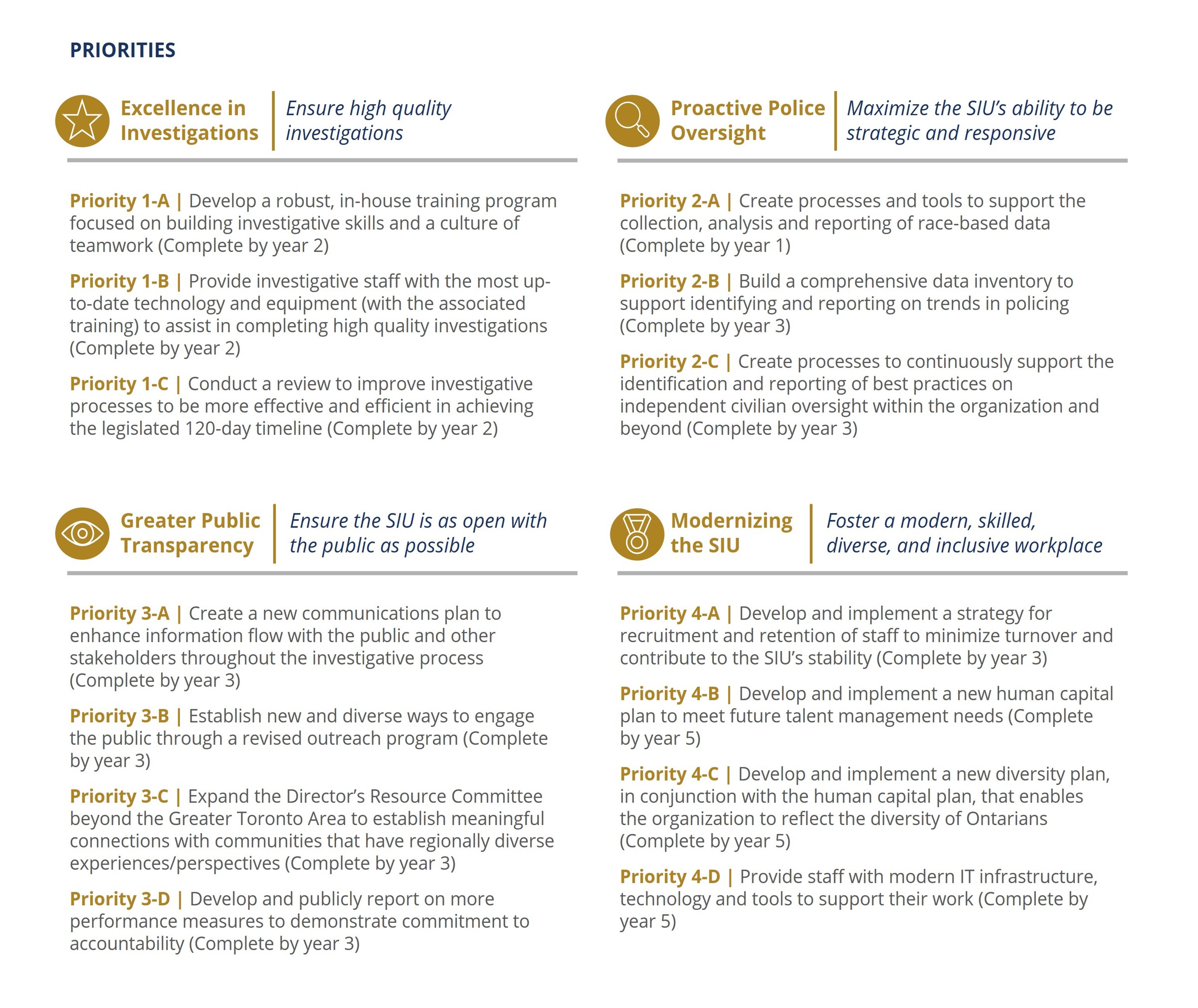
Year 1: 2024/25 (Completed)
- Implemented systems and tools to support the collection, analysis and reporting of data and Statistics including race-based data;
- Provided investigative staff with modern IT infrastructure, technology and tools to support their work including updated forensic equipment, new case management solution and digital evidence management system; and,
- Expanded the Director’s Resource Committee beyond the Greater Toronto Area to establish meaningful connections with communities that have regionally diverse experiences/perspectives.
Year 2: 2025/26
- Continuous optimization of limited resources to reduce duplication and inefficiencies across programs and operations;
- Reviewed existing business practices and operational polices to ensure emerging trends and improvement are included;
- Strengthened the way the organization is structured by way of enhancing, adding and/or dedicating functions, and formalizing certain essential support program areas;
- Built a comprehensive data inventory (KPI Framework) to support identifying and reporting on trends in policing;
- Conducted a review to improve investigative processes to be more effective and efficient in achieving the legislated 120-day timeline;
- Created processes to continuously support the identification and reporting of best practices on independent civilian oversight within the organization and beyond;
- Engaged with First Nation communities (including NAN) to ensure quality and standards-based investigations with growing case complexities and perplexities; and,
- Fostered an Inclusive culture by diversifying the leadership cadre.
Year 3: 2026/27
- Develop an accredited in-house training program focused on building investigative skills and a culture of teamwork;
- Develop and implement a wellness program comprised of critical incident stress debriefings (CISD) and peer-to-peer for investigators exposed to psychologically traumatic events (PTE) including major motor vehicle collisions, shootings, and sexual assault complaints;
- Digital first by fully integrating the use of data and analytics into all operational systems and processes;
- Develop and publicly report on more performance measures to demonstrate commitment to accountability;
- Create a new communications plan to enhance information flow with the public and other stakeholders throughout the investigative process;
- Develop and implement a strategy for recruitment and retention of staff to minimize turnover and contribute to the SIU’s stability; and,
- Establish new and diverse ways to engage the public through a revised outreach program.
Year 4 & 5: 2028/29
- Develop and implement a new human capital plan to meet future talent management needs (Complete by year 5); and,
- Develop and implement a new diversity plan, in conjunction with the human capital plan, that enables the organization to reflect the diversity of Ontarians (Complete by year 5)
- Process Improvements: With the influx in cases, year-after-year, the SIU is working to modernize its processes to optimize efficiencies
- Leveraging New Technology: To mitigate SIU’s internal risks related to keeping up with new technology, the agency will streamline reporting and inform decision-making with data and analytics, the SIU is continuously modernizing the use of new technologies, this would optimize efficiencies and significantly reduce errors
- Maximizing Use of Existing Resources: extend its training and education to better support all staff and improve communications via various share point platforms such as SIU Connect, Routine Communications (operational directives)
First Nations Opt-In Engagement
As of January 1, 2025, the SIU implemented the following initiatives to prepare itself with the expanded oversight jurisdiction over NAPS:
- Held meetings with NAPS executives and command staff, discussed and clarified respective roles and responsibilities for SIU mandated incidents;
- Held numerous outreach, training and cultural exchanges including respectful engagement practices, cultural protocols, the importance of obtaining territorial permissions, an overview of the historical and political context of NAN, and the 30-year journey of NAPS towards inclusion in the CSPA framework;
- Launched a Microsoft SharePoint site (“NANTI”) shared with Ontario’s LECA and Inspectorate of Policing (IOP), to provide critical information of the band structures, key contact information and logistical planning for remote community access;
- Secured 24/7 communication through the Ministry of Environment, Conservation and Parks (MECP) call center for SIU employee check ins, and tiered responses in the event of missed check ins and to mitigate any safety concerns of investigators while on NAN territories;
- Drafted and sent an introduction letter to all 49 NAN Chiefs (September 29, 2025); and
- Acquired additional resources for an experienced policy counsel to the legal team to draft MOU’s with NAPS and NAN and to negotiate the terms of the MOU’s.
The SIU is working on other strategies to ensure successful implementation of this program, including
- Developing a communications strategy to support SIU investigators when in NAN remote communities where regular cellular service is unavailable.
- Creating two specialized teams [IIRT] to handle all NAPS and other First Nations Investigations.
The IIRT will operate like an Emergency Response Team (ERT) and be the first investigators dispatched to high risk, highly sensitive, urgent and immediate response situations. Investigators will be trained on how to survive in remote areas with harsh weather conditions (-40 degrees). Investigators will also be educated on issues in communities that lack modern infrastructure (lodging), transportation challenges in areas accessible only by snowmobile or seaplane, and areas that lack food and clean drinking water.
Each team is designed to have (one) 1 lead investigator, (two) 2 regional investigators, (two) 2 forensic investigators and (one) 1 APC.
The SIU drafted 34 Memorandums-of-Understanding (MOU) between the SIU and each Nishnawbe-Aski Nation community.
Staffing, Human Resources, and Compensation Strategy
SIU will identify and address workforce gaps to ensure appropriate levels of resourcing are in place to deliver on new legislative requirements, address emerging issues early and maintain day-to-day operations. The agency will:
- Pursue targeted recruitment to ensure SIU reflects the communities it serves.
- Continue hiring more diverse talent, such as women, younger age ranges, non-police, and Black and Indigenous employees.
- Utilize succession planning to strengthen the talent pool and address retirements.
- Provide training opportunities to support employee learning and career development.
- Analyze employee engagement survey results to identify and action priorities.
- Consider investing in employee candidates outside SIU’s traditional talent pool.
- Enhance efforts to foster a culture of interdisciplinary teamwork and employee collaboration.
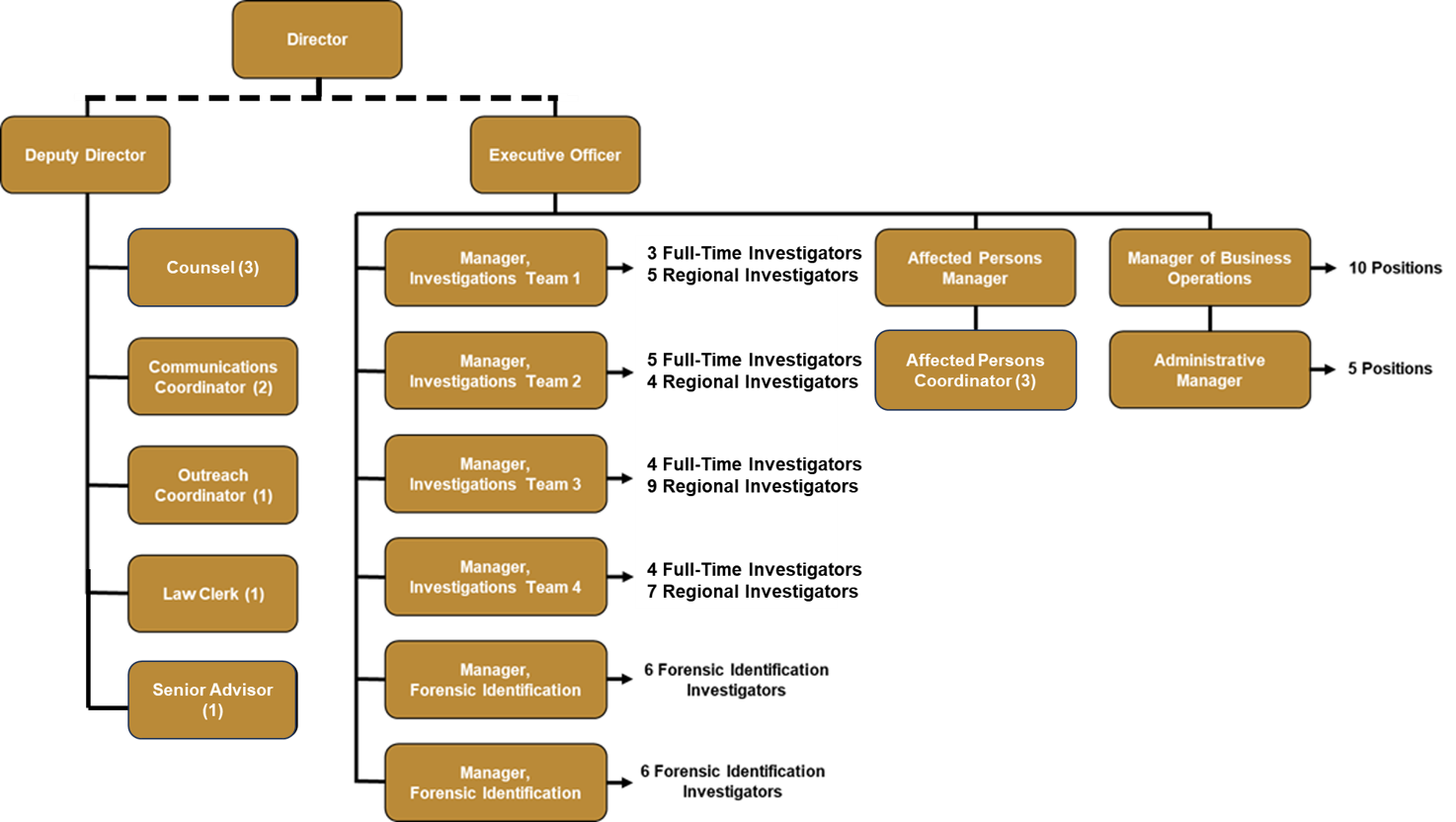
SIU Organizational Chart
Information Technology (IT) / Electronic Service Delivery (ESD) Plan
SIU has prioritized the modernization of its digital and IT solutions to provide better support to investigations. Improving systems functionality and optimizing information collection and use will help strengthen the agency’s reliability, performance, and ability to meet business-critical needs, such as responding to new legislative requirements.
During FY 2023-24, SIU proceeded with two key IT initiatives: 1) Implementation of Niche Records Management System (NicheRMS) as the new case management solution, and 2) adopting the use of Live Scan Fingerprinting.
The new Niche RMS better supports managers and employees by providing efficient methods of documenting and accessing data, evidence, and information and supporting evidence-based decision-making in the areas of workload assignment, planning, workflow, resourcing, and reporting on performance measures.
The adoption of the Live Scan Portable Fingerprinting Machine will allow for SIU to transition from the use of paper fingerprints to digital fingerprints. Fingerprints are taken from the subject official when charges are laid following the conclusion of an investigation. Currently, subject officials are required to travel to SIU HQ where their fingerprints are taken using ink. The new Live Scan is portable which will allow the SIU to complete the fingerprinting process while investigators are laying the charge(s) in the home jurisdiction of the subject official.
The SIU leverages AI technologies including DEMS Auto-Transcribe. Auto-Transcribe is centered on an AI model called Automated Speech Recognition (ASR). This model intakes audio and outputs text. This feature is used to transcribe audio and video evidence as part of an investigation or in disclosure.
The collection of race-based data from persons impacted by its investigations is now collected primarily via electronic survey to improve response rates and accessibility.
Initiatives Involving Third Parties
Section 10 of the Special Investigations Unit Act, 2019 states, “The SIU Director may, subject to any prescribed conditions or restrictions, enter into agreements with a First Nation in Ontario, the Government of Canada, the government of another province or territory of Canada, a Canadian municipality outside Ontario or any other entity outside Ontario, for the purpose of conducting or assisting with investigations.”
The Director will use discretion when entering into agreements of this nature and will consider any resourcing issues associated with this initiative.
The SIU entered into a number of agreements pursuant to this provision in the last few years including an agreement to investigate incidents for Nova Scotia’s Serious-incident Response Team and a paper review of a case with the Independent investigations Unit, Manitoba.
As always, SIU will enter into research collaborations/opportunities with respect to its investigative data as long as agreements are in place concerning privacy and confidentiality.
Sharing Best Practices with Other Stakeholders
Currently, eight (8) civilian police oversight agencies operate in Canada:
- British Columbia Independent Investigations Office,
- Alberta Serious Incident Response Team,
- Saskatchewan Serious Incident Response Team,
- Independent Investigations Unit of Manitoba,
- Special Investigations Unit (Ontario),
- Québec Bureau des enquêtes indépendantes,
- Newfoundland Serious Incident Response Team,
- Nova Scotia Serious Incident Response Team.
Communications and Outreach
Communications Program
Maintaining and enhancing the community’s confidence in law enforcement bodies in Ontario is an important part of SIU’s mission. This is facilitated through effective communications and outreach. The goal of SIU’s Communications and Outreach program is to maintain and enhance confidence in the SIU by the public and to increase awareness of the agency across Ontario.A comprehensive strategic communications and outreach plan is in development to assist the SIU in achieving its goal of transparency through public reporting, build positive relationships with the media and communities it serves and keep the public informed of SIU investigations. The plan will forecast communication and outreach projects and activities to be implemented.
Across Ontario, the media is keenly interested in being kept current with SIU’s investigations. In general, once SIU has invoked its mandate, it informs the media and public on the status of a case through news releases, tweets, interviews, regularly updated website content and outreach to the public.
News Releases
Keeping the public informed about its investigations is a key part of SIU’s commitment to transparency.
News releases may be issued when SIU initially invokes its mandate or provides an update on an ongoing investigation. A news release is always issued at the conclusion of an investigation, regardless of whether it was concluded via a criminal charge, Director’s Report, or a case closure by memo. News releases are posted on the SIU website, e-mailed to subscribers, and posted as a tweet.
News Release Types
- Initial: At the beginning of an investigation, an initial news release will be issued for cases involving a death, a firearm discharge at a person, major collision, or other high-profile matter.
- Case Update: During an investigation, an update to the status of the investigation may be provided via a news release.
- Director’s Report: In cases where the Director finds no evidence to proceed with criminal charges against the police official(s) involved, a Director’s Report is published on the SIU website as well as an accompanying news release.
- Case Closed by Memo: In cases found to fall outside SIU jurisdiction, the Director will terminate the investigation and issue a memo that outlines the reasons for the decision. A news release is issued for every case closed by memo.
- Charge Laid: If the Director finds evidence to lay criminal charges against a police official, charges will be laid, and a news release issued with the official’s name, charge(s) and court date.
- Other: Non-case related news releases may be issued for various reasons, such as legislative updates or other news.
In cases involving allegations of sexual assault, SIU generally will not release details to the public that could potentially identify the individual alleging a sexual assault occurred or the official who is the subject of the allegation. The release of information related to investigations of sexual assault allegations is always associated with a risk of further deterring what is an under-reported crime and undermining the heightened privacy interests of the involved parties, most emphatically, the complainants.
X Corp. (formerly known as Twitter Inc.)
X is an important communications tool for SIU. To date, the agency has over 25,000 followers and has made over 5,000 posts. Posts are sent to inform the public about news releases and Director’s Reports, to appeal for witnesses, direct individuals to documents such as annual reports, and promote outreach activities. Where appropriate, SIU will provide responses to questions or comments on X.
Media Interviews
Communications Coordinators regularly conduct media interviews as soon as possible. The information shared with the media is consistent with what would normally be included in a news release (regardless of whether a news release has been issued).
To improve the quality and quantity of information shared with the media, news releases are done for high profile cases. However, it is also important for SIU to make it easy for the public/media to find information about non-high-profile cases. To that end, on the SIU website, a case status list is updated daily.
When attending a scene to do a media interview is not feasible or required (e.g., due to distance, timing, or case type), an on-camera appearance may be necessary.
- Video news release recordings, as was done in the North York case (22-OFD-164), provide the presence of a Communications Coordinator without their having to go to the scene. Video clips can be embedded in news releases and/or posted on X, allowing media to use them for their television or radio broadcasts.
- Another option is to do interviews via Zoom, a practice that became increasingly popular during and post COVID-19 pandemic.
- When reporters request interviews and on-scene interviews are not feasible, interviews can be done at SIU’s Mississauga headquarters.
Website Content
The SIU website is another valuable communication tool to assist in achieving the agency’s goal of transparency through public reporting. The website provides information to the public about SIU programs, outcomes of investigations, publications such as the Annual Report and media releases. Members of the public wishing to contact SIU to provide tips or make a complaint about a police official have the ability to electronically submit photos, videos or audio files via the website.
An important element of the communication strategy is to ensure website content is accurate and reflects the most current actions of the SIU. For content that changes frequently (e.g., status of cases page and breakdown of occurrences), the backend of the website should be updated daily. To ensure website content is current and accurate, SIU will seek feedback from staff and review feedback provided by the public. The website pages should be reviewed monthly to ensure links are working accurately and images are not outdated.
Outreach Program
Nurturing the public’s confidence in the law enforcement services of Ontario is an important part of SIU’s mission. This is accomplished in some measure by the extent to which the community understands and has trust in the work of the SIU as a civilian oversight body. Outreach is essential to building confidence in civilian oversight and law enforcement accountability with both law enforcement services and community members.SIU’s outreach efforts aim to:
- increase awareness of SIU and its mandate;
- enhance confidence in the integrity of SIU in conducting independent investigations;
- develop and strengthen stakeholder networks;
- encourage the public to report incidents and support the investigation process;
- encourage constructive scrutiny of its operations; and
- increase opportunities for corporate learning and improvement.
- develop and deliver outreach initiatives specific to each target group;
- create information materials such as brochures translated into different languages for easy understanding by newcomers to Ontario; and
- proactively participate in various community events and tradeshows and engage with an audience that is representative of Ontario’s population diversity, to deliver education/information sessions.
- community/advocacy groups,
- Indigenous communities,
- youth groups, high school, and college students,
- new immigrants,
- disadvantaged/marginalized communities,
- universities and colleges delivering police foundations programs, other justice related courses and community and social services programs,
- law schools and legal clinics,
- emergency Medical Services,
- hospital personnel.
First Nations, Inuit and Métis Liaison Program (FNIMLP)
The First Nations, Inuit, and Métis Liaison Program (FNIMLP) will be enhanced to increase awareness and continue building relationships with Indigenous communities by:- proactively engaging the Indigenous leaders in dialogue to establish relationships;
- developing an outreach program specific to the needs of Indigenous communities;
- participating in Indigenous activities and events to increase awareness of the SIU within Indigenous communities (e.g., Pow Wow celebrations, National Indigenous Peoples Day, art festivals and conferences); and
- IU employees attending training and workshops to learn about Indigenous practices and protocols.
- attend First Nations training at least once per year;
- assist the agency with the development and implementation of Indigenous-based cultural competency training for all SIU staff; and
- assist the agency with the development and delivery of outreach initiatives to Indigenous persons, organizations and communities, and developing and maintaining a positive professional relationship with leaders and representatives of Indigenous organizations and communities.
- Support the SIU with operationalizing NAPs onboarding and implementation of new and updated policies, procedures, and protocols.
The Community Safety and Policing Act, 2019 (CSPA)
On March 26, 2019, the Legislature passed the Comprehensive Ontario Police Services Act, 2019, (COPS Act) to restore accountability and trust in the police oversight system. The Community Safety and Policing Act, 2019, (CSPA) (a schedule to the COPS Act) was proclaimed into force on April 1, 2024, and replaced the Police Service Act, 1990 (PSA).Pursuant to the CSPA, First Nations communities policed by their own services that currently fall outside the SIU’s jurisdiction may opt-in to SIU oversight.
On December 10, 2024, the NAPS Board opted-in to the CSPA, in turn, opting-in to SIU oversight. This has several impacts:
- Expanded Jurisdiction: The SIU will now have jurisdiction over incidents involving NAPS officers, in addition to its existing mandate over municipal, regional, and provincial police officers; this means the agency will investigate more cases.
- Increased Caseload: The SIU will experience an increase in the number of cases it needs to investigate; leading to a higher workload for investigators and longer investigation times.
- Enhanced Accountability: Enhance accountability and transparency in policing within First Nations communities; aligning with the broader goals of the CSPA and goals of the SIU.
- Cultural Sensitivity: The SIU will need to ensure that its investigators are trained in cultural sensitivity and awareness, particularly regarding Indigenous communities; critical for conducting fair and respectful investigations.
- Collaboration and Communication: Effective collaboration and communication between the SIU and NAPS will be essential; establishing clear protocols and lines of communication will help ensure smooth and efficient investigations.
Diversity and Inclusion Plan
As the communities SIU serves continue to grow and change, the agency must continue to endeavour to reflect the Ontario public. Additionally, as SIU strives to become an employer of choice, management is aware of the importance of establishing an open, equitable and respectful workplace where all staff members participate fully and take part in the development of programs and services.
It is important for SIU to create an atmosphere where employees feel valued, and their ideas are heard and respected. Employees are more engaged in an environment that is inclusive, resulting in a better performing organization.
To advance diversity and inclusion, SIU will take the following approach:
- Continue reviewing and updating policies, processes, practices, services, and programs to create a positive, respectful, and inclusive workplace.
- Ensure a diverse member is on each competition panel, ensure there are no barriers to employment opportunities for racialized groups.
- Continuously improve talent acquisition and retention processes to build a workforce that reflects the communities served by the Unit: broadly advertising to various community boards, SIU website to reach more diverse candidates.
- Build employees’ knowledge and capacity to help foster positive, respectful and inclusive work experiences and to advance racial equity.
- Apply an anti-racism lens to organizational, operational and modernization initiatives: reporting on the collection of race-based data via the SIU website.
- Further explore ways to remove barriers from the work of the organization; for example: ensure participants from equity seeking groups or DRC community groups are included if/when consultations are held.
- Managers to champion change and to be accountable for an anti-racist and inclusive workplace (employee complaints of harassment and/or discrimination are promptly addressed).
Multi-Year Accessibility Plan
SIU is committed to ensuring equal access to justice for all Ontarians. This includes providing services and programs that people with disabilities can use and benefit from equally and free from discrimination. The agency is committed to creating an accessible organization by removing barriers for people with disabilities whether they work in the SIU, do business with the SIU or are members of the public who use SIU services.
The agency proactively drafted and implemented comprehensive policies including inclusive employment, equitable customer service, digitally inclusive communications, barrier-free facility, and accessibility training. The SIU is committed to ensuring equal access and participation for people with disabilities. The SIU is committed to treating people with disabilities in a way that allows them to maintain their dignity and independence. The SIU believes in integration and are committed to meeting the needs of people with disabilities in a timely manner. We will do so by removing and preventing barriers to accessibility and meeting its accessibility requirements under the Accessibility for Ontarians with Disabilities Act, 2005 (AODA) and Ontario’s accessibility laws.
Statement of Commitment
The SIU is committed to treating all people in a way that allows them to maintain their dignity and independence. The SIU believes in integration and equal opportunity. We are committed to meeting the needs of persons with disabilities in a timely manner and will do so by preventing and removing barriers to accessibility and meeting accessibility requirements under the AODA and O. Reg. 191/11 Integrated Accessibility Standards (IASR) which reaffirms the government’s commitment to accessibility across the OPS. The SIU aims to provide its services in accordance with the Ontario Human Rights Code (the Code) and the accessibility standards made under the AODA and IASR.
To support this, SIU has adopted the Ontario Public Service (OPS) and MAG established policies, procedures and processes including the OPS Accessible Customer Service Policy and integrated accessibility criteria into its procurement processes.
As an agency, the SIU is now a designated public sector organization and legally required to file an accessibility compliance report and develop its Multi Year Accessibility Plan. Examples of progress achieved under this include:
- Improving employment opportunities for persons with disabilities by:
- building awareness about accommodating employees with disabilities through agency training.
- Serving the people of Ontario better by:
- complying with website requirements (or WCAG 2.0 AA standards) and frequent audits.
- notifying the public about the availability of accessible formats and communications supports on its website.
- providing notice on planned or unplanned service disruptions, estimated duration, and alternative services available.
- designating an accessibility lead [4]
- Eliminating physical barriers in our building by:
- maintaining full accessibility of the facilities, including doors, washrooms, parking[5], and furnishing.
- continuing to improve accessibility features in the workplace.
- inclusive employment,
- equitable customer service,
- digitally-inclusive communications,
- barrier-free facility, and,
- • accessibility training.
Three-year Financial Plan
Multi-Year Operating Budget| Expense Category | 2026-27 Budget | 2027-28 Budget | 2028-29 Budget |
|---|---|---|---|
| Salaries and Wages | 9.2306 | 9.2306 | 9.2306 |
| Employee Benefits | 1.1424 | 1.1424 | 1.1424 |
| DOE | 10.3730 | 10.3730 | 10.3730 |
| Transportation & Communications | 0.3860 | 0.3860 | 0.3860 |
| Services | 0.8120 | 0.8120 | 0.8120 |
| Supplies & Equipment | 0.0617 | 0.0617 | 0.0617 |
| ODOE | 1.2597 | 1.2597 | 1.2597 |
| Recoveries | (0.0010) | (0.0010) | (0.0010) |
| TOTAL Operating | 11.6317 | 11.6317 | 11.6317 |
| FTE Allocation* | 48 | 48 | 48 |
Performance Measures and Targets
The SIU conducts criminal investigation that involve variables outside of its control, including increasing case load, complexity of cases, the need to wait for other forensic evidence (such as postmortem reports) and expert opinion. Also, charge cases inherently take longer as a result of compiling Crown Briefings.
Performance Measures and Targets from FY 2026-27 to FY 2028-29.
| # | Outcomes for End Users or Beneficiaries | Performance Indicators to Measure Outcomes | Baseline Value and Date (2022-23) | Target Value and Date (2026-27 to 2028-29) | Frequency (e.g., quarterly, annually) and Source of Data Collection |
|---|---|---|---|---|---|
| 1 | Timely completion of investigations | Proportion of cases completed within the 120-days | 89.9%[6] | 92.3--%[7] | Frequency: Annual Data source: SIU internal records |
| 2 | Training and development | Completion rate of cultural competency course(s) | 100.0 % | 100.0 % | Frequency: Annual Data source: SIU training records |
| 3 | Enhance public awareness | Proportion of news/media releases for all cases | 100.0 % | 100.0 % | Frequency: Annual Data sources: SIU website |
Endnotes
- 1) The Community Safety and Policing Act, 2019, (CSPA) was proclaimed into force on April 1, 2024, and replaced the Police Services Act, 1990, (PSA). Pursuant to the CSPA, First Nations communities policed by their own services may opt-in to SIU oversight. Note: As of December 10, 2024, the Nishnawbe Aski Police Service (NAPS) opted into the CSPA which has several impacts on the SIU. [Back to text]
- 2) Under the Special Investigations Unit Act, 2019, section 34 (1), the SIU Director shall publish a report on the website of the SIU containing, but not limited to, any relevant video, audio or photographic, de-identified to the extent possible, subject to section (2). [Back to text]
- 3) Under the Special Investigations Unit Act, 2019, section 35 (1), the Director shall endeavour to ensure that, no later than 120 days after the commencement of an investigation under this Act into the conduct of an official, (a) the investigation is concluded; and (b) public notice is given under subsection 33 (1) or 34 (1). The increasing volume in cases, including increasing complexity of cases, poses a risk meeting timeline. [Back to text]
- 4) The lead will promote awareness of accessibility and support the agency with understanding and meeting the legislated accessibility requirements. [Back to text]
- 5) The SIU headquarters (5090 Commerce Boulevard) is public facing with parking space. [Back to text]
- 6) Target represents post-proclamation of the SIU Act. This excludes non-death and non-charge investigations. [Back to text]
- 7) The SIU conducts criminal investigation that involve variables outside of its control, including increasing case load, complexity of cases, the need to wait for other forensic evidence (such as postmortem reports) and expert opinion. [Back to text]